|
Electrical
Electricity turns a dollhouse or room box into a realistic setting. It gives depth,
character and dimension. While the most common wiring systems for miniatures in
the United States is 12 Volt, you will find some from Sweden that are 4 Volt.
Many people are fearful of wiring a dollhouse because they do not understand electricity.
Kits,
books, videos and
instructions make it very simple for novices to learn basic wiring.
The purpose of this chapter is to offer suggestions for wiring your dollhouse. Since
miniature electrical systems are often troublesome and touchy at best, be sure to
follow the instructions that are provided in your wiring kit.
For the novice learning to wire miniatures, I suggest you purchase Barbara Warners
book, Dollhouse Electrification in
Miniature. When I owned my miniature shop, I recommended it often to my
customers. She gives a good description of the different types of wiring, how to
use them individually and together, and many do's and don'ts. This book will help
you make up your mind which type of wiring system you would feel more comfortable
with.
Barbara also provides some great tips. For example: Because I wear tri-focals, I
always had problems working on ceilings and far corners, putting in ceiling canopies,
etc. on big houses that I could not turn upside down. She suggested that people
who wear bi-focals should put them on upside down. It works! Thanks Barbara! After
deciding on a system, remember to carefully read the instructions that are included.
After reading both Barbara's book and the instructions, you should have very few
problems wiring your dollhouse.
Wiring
The Dollhouse
The first thing to do before wiring a dollhouse, regardless of the type of wiring
system you will use, is to draw a wiring diagram of the inside of the house. On
this diagram, or road map, you are going to indicate where all of your wiring will
run. Now is the time to decide if you want ceiling lights, sconces, a door bell,
outside coach lights or a porch ceiling light. For ceiling lights, you may run the
wire along the ceiling, or drill a hole, and run the wire on the floor above. Porch
light wires are usually run through a hole drilled in the outside wall to the inside
wall to be attached. Sometimes people using the tape wire system prefer to double
wire at the baseboard and sconce level, to make certain that they will have wire
for placement of additional lights in the future.
There are two types of 12 Volt
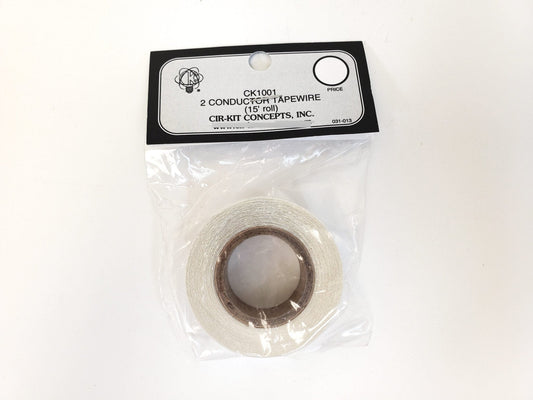
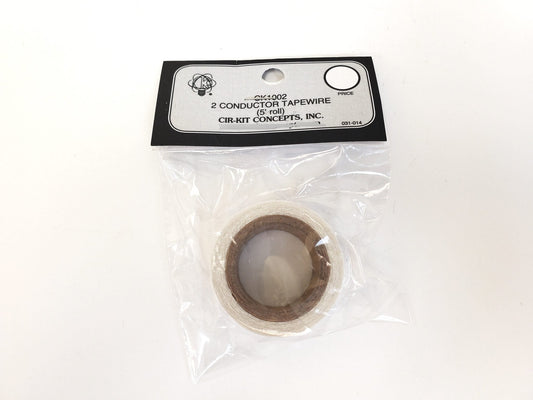
systems available: hard wire and tape wire. The tape wire system uses a flat copper
tape wire, which comes as a bare single tape, or as a double conductor copper tape.
The double conductor copper tape is made of two runs of flat copper tape uniformly
spaced on transparent Mylar® tape. The Mylar® tape is treated for either painting
or papering. Both types have adhesive across the entire width of the tape, as well
as a protective paper that peels off for installation. The double tape on Mylar®
takes less time to install, because both runs are done at the same time. While the
single bare copper tape is spliced with special tape patches or solder, splices
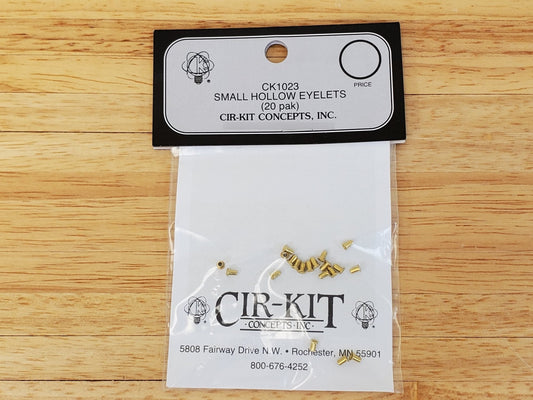
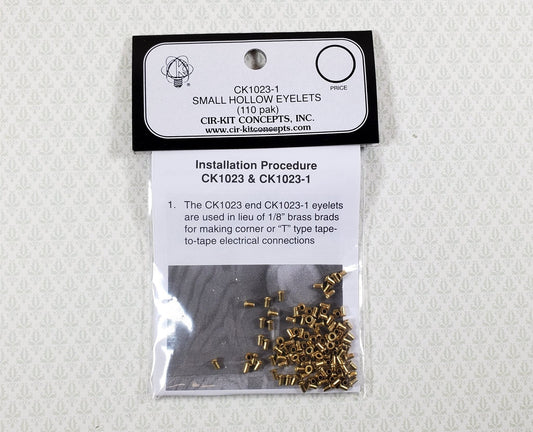
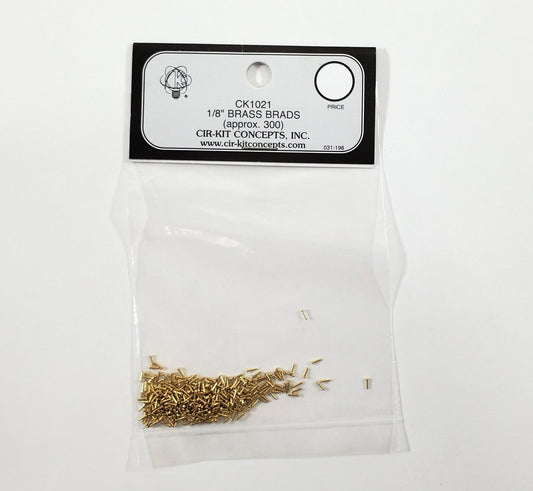
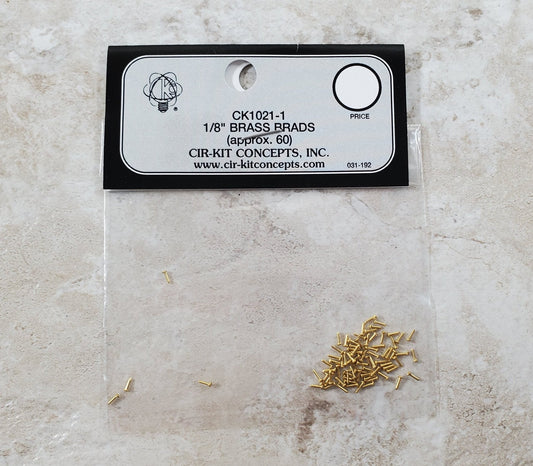
are made by using small brass brads or grommets for the double Mylar® tape. The
single tape wire is best to use on Masonite®, foam core, ceiling tile or other very
hard surfaces where brads cannot be used. The copper tape systems eliminate grooving
and hiding the hard wire. It is applied behind wallpaper or paint, and allows lights
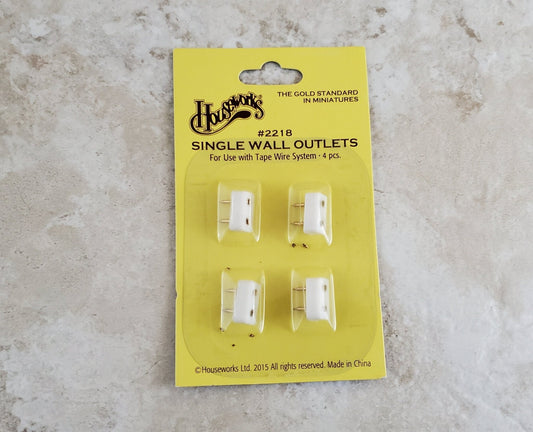
to be attached anywhere along the tape either with grommets, outlets or direct wiring.
Double Conductor Copper Tape Method
(comes in different sizes, 15',
30',
50')
Following the house wiring diagram:
- Draw a line along the walls
1" above the floor in each room. (I use a ruler which is one inch wide, that I set
on the floor to draw my lines.)
- Using the line as a guide for
the bottom edge, run the double run copper tape above the line. This keeps the lines
straight. Also, after the wall is papered, you can put the ruler against the wall
and know where the tape is located.
- Try to avoid handling the adhesive
side of the tape any more than necessary, since fingerprints tend to reduce the
adhesive quality of the tape.
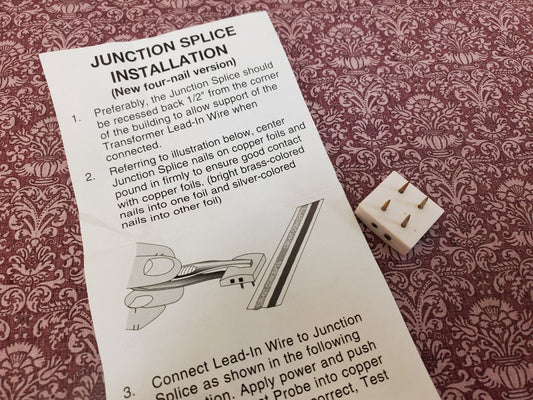
- Decide where you will start
wiring, so that you can attach the
junction splice to the house. This must be in an area that makes it convenient
to run the lead-in wire from
the transformer to the junction
splice. On a back-opening house, I usually put the junction splice on the back edge
of the outside of the house near the bottom.
- Run the first line along the
inside wall from the starting point.
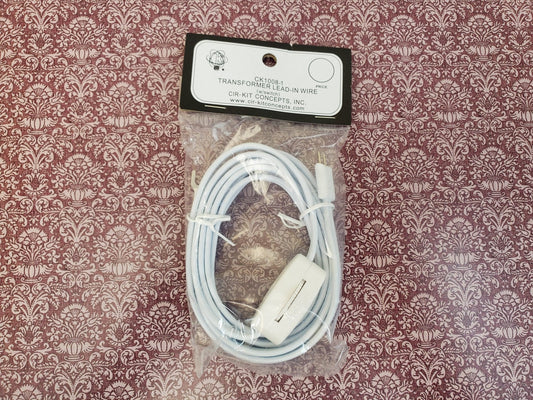
- Attach the junction splice,
lead-in wire and transformer, medium,
big,
small.
- Plug the transformer into the
wall socket.
- Turn on the switch on the lead-in
wire
- With a
test probe, or a test bulb,
test the first run to be sure that you have a good connection at the junction splice.
- Turn off the switch and continue
running the tape.
Installing brads:
- Install
brads in the same diagonal direction to avoid the possibility of a short.
- When you must remove a brad,
replace the brad in the same diagonal direction as the one removed. This is particularly
important on right angle connections.
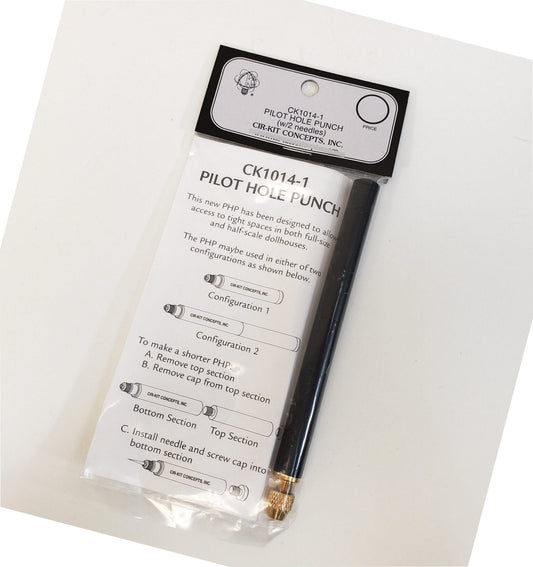
- To start the hole for the insertion
of the brads, use a pilot hole punch or a push pin. Make sure that the pilot holes
are small where you start the brads, because this allows a good connection for the
brad and the tape. If the hole gets too big, it will cause a loose connection, and
that strip will not work.
- Be sure the brad does not bend.
- Hold the brad with a pair of
needle nose pliers to start the brad into the hole as you pound. Whenever you make
a connection using brads, turn on the switch and test after each connection to see
if it works. You will feel elated when the test probe or test bulb lights!
REMEMBER: Always have the switch off while you are running tape or making connections,
so that you will not cause a short.
Hard Wire
System:
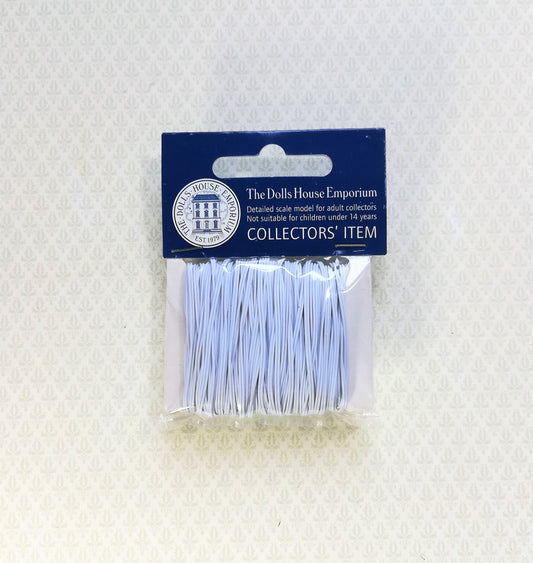
The hard wire system is done with conventional round wire; usually 32 gauge
2-conductor wire. 2-conductor wire is used to attach the light fixtures to
a feed wire, lighting control panel or terminal strip. This can be done using the
Groove Method (where the wire is hidden behind the mouldings), or you can run the
wire along the edge of a wall or ceiling. Antique dollhouses or houses already wallpapered,
floored etc. can usually be wired using one of the hard wire systems. Also, some
houses with extremely hard surfaces are better suited for power strip systems.
The Groove
Method:
Draw your wiring diagram. Determine whether your house will be on one circuit, a
power strip, or a lighting control panel. With this decision, you are ready to install.
Plan to install more outlets than necessary in the beginning, because this will
make the addition of more lights easier in the future. Basically, the Groove Method
involves cutting a thin groove for the wire along the walls and floors. The best
way to make grooves is with a "church key"- an old fashioned pop can opener.
Put the point of the "church key"
into the wood, press down with your thumb, and run the key along a straight line
to indicate the placement of the wire. This line is actually a groove for your wire.
Install the wire by placing it
in the groove. Remember to keep the wire taut, but don't pinch it.
Hold the wire temporarily in place
with tape.
For permanent installation go back
and fill the grooves with Elmer's carpenter's glue or a silicone adhesive. This
will keep the wire permanently in place and provide extra insulation. Any excess
glue on the surface can be sanded smooth after it has dried.
Ceiling Fixtures
- Drill a small hole in the ceiling
that your fixture will hang from.
- Run the wire along the floor
above the light, across the wall and down to the power source using the Groove Method
(above). Remember, it is easier to finish your wall or ceiling before you actually
secure your lights - so do your wallpapering and/or painting now.
When you glue the ceiling fixtures,
use the "dead man" method:
- Take a flexible stick slightly
taller than the height of your ceiling.
- Glue your fixture into place.
I find G.E. silicone an excellent adhesive to fasten the fixture to the ceiling.
It is also good to use as an insulation where you have spliced wires.
- Take the stick and bend it,
one end against the base of the light attached to the ceiling and the other directly
below the light against the floor. You will find this much easier than holding it
in place until the glue is dry.
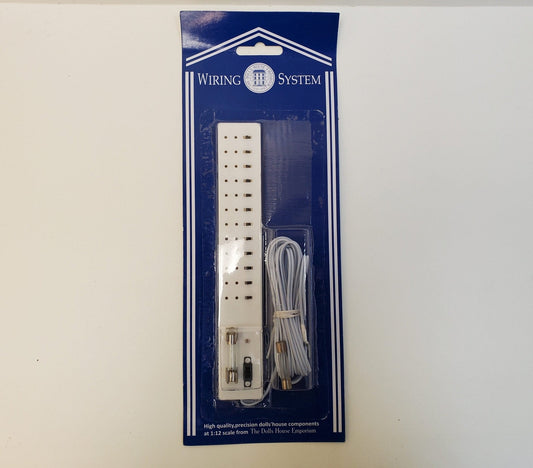
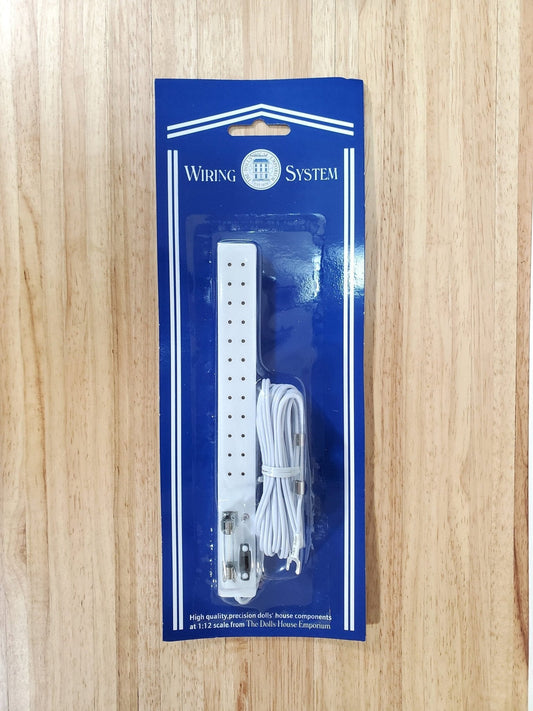
Power Strip System
-
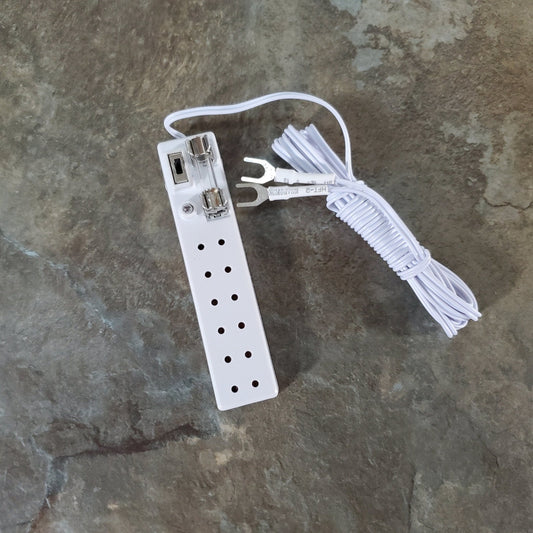
The Power Strip has an on/off switch, uses a
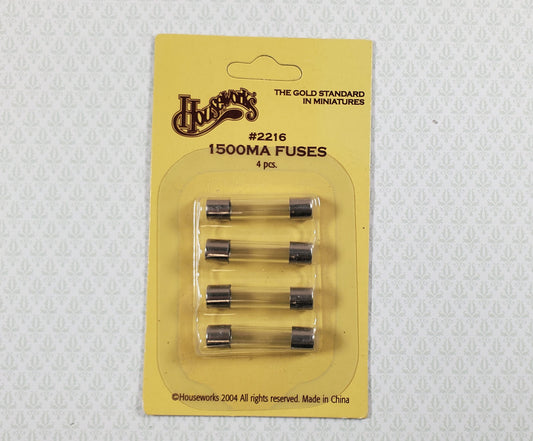
1.5 amp fuse , and will illuminate up to 1500 ma.
- The power strip has 12 receptacles
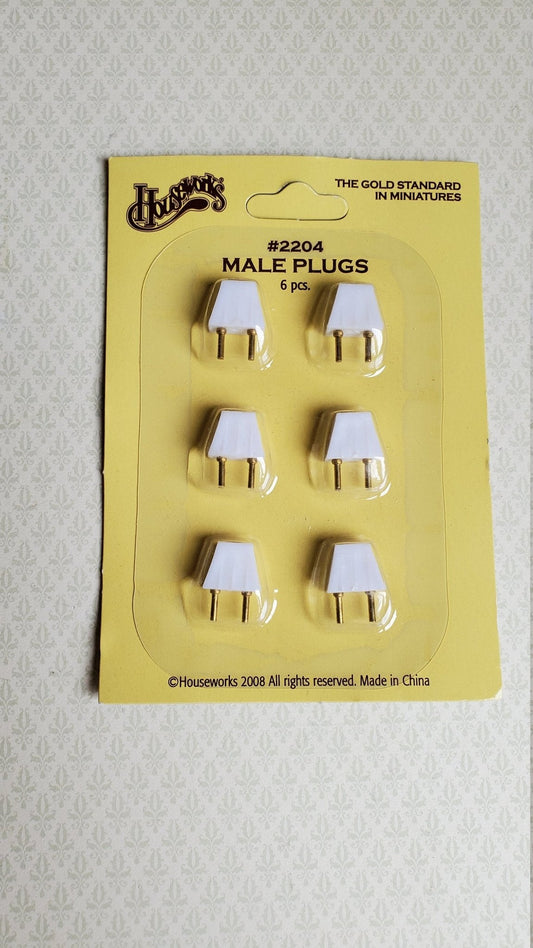
for 12 twelve plugs. These are
the oversized plugs that are used on most manufactured light fixtures.
- The wires from the lights may
be run behind the baseboard or trim, in order to hide them from view.
- The power strip may be hidden
on the back of, or under, a project.
- It has a direct wire to be
attached to the transformer, which is then plugged into a regular wall socket.
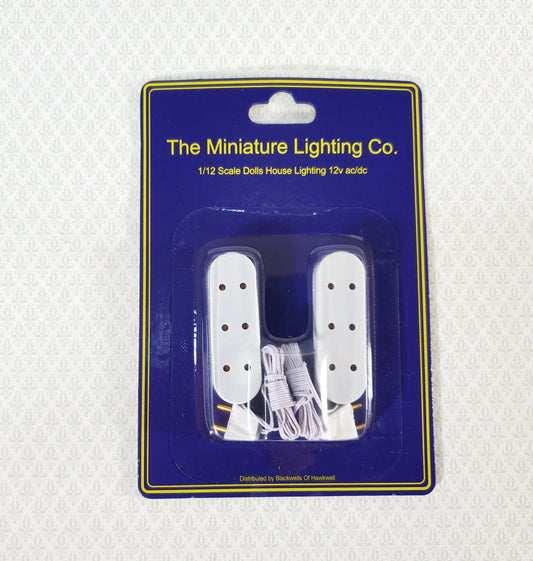
- In your doll house, you can
use triple receptacle or
single receptacle extension cords, and plug them into the powerstrip.
- Extension cords will enable
you to use more than 12 fixtures (if you have enough milliamps), or reach areas
where the lamp wire is not long enough to plug directly into the power strip.
Battery Pack
- The Battery Pack (or console)
is used with 3 Volt systems.
- It requires two "C" cell 1.5
Volt batteries.
- The lights used with the battery
pack require 3 Volt bulbs. Do not use a 12 Volt bulb or light, as it will blow the
bulb.
- Use only fixtures with replaceable
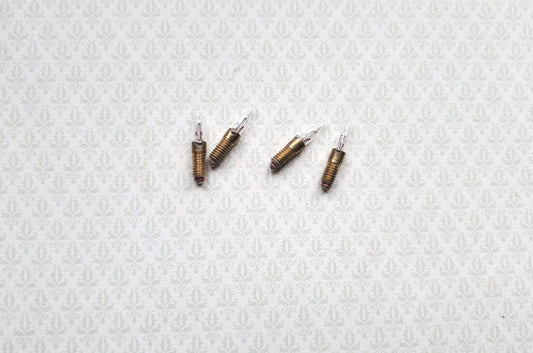
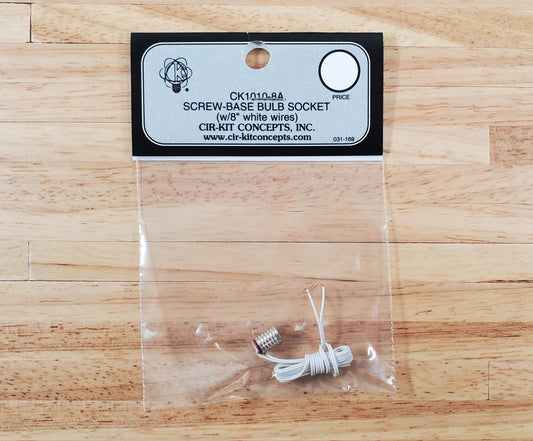
screw base bulbs, so that the 12V bulb can be replaced with a
3 Volt bulb .
- This system does not work well
when lights are to be left on for an extended length of time as the batteries will
not last.
Transformers and Bulbs
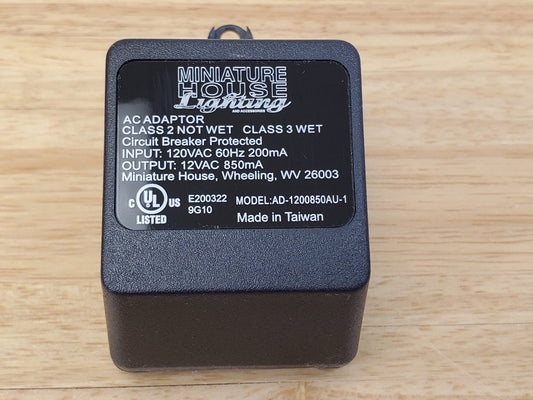
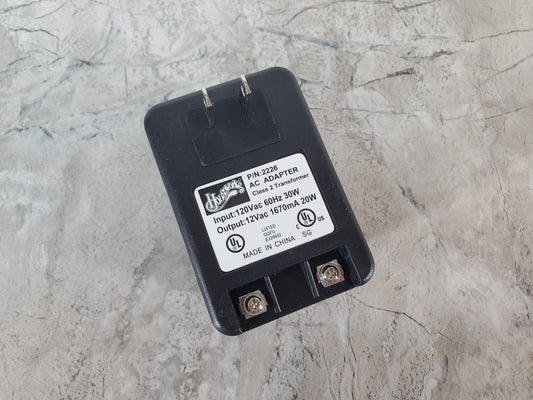
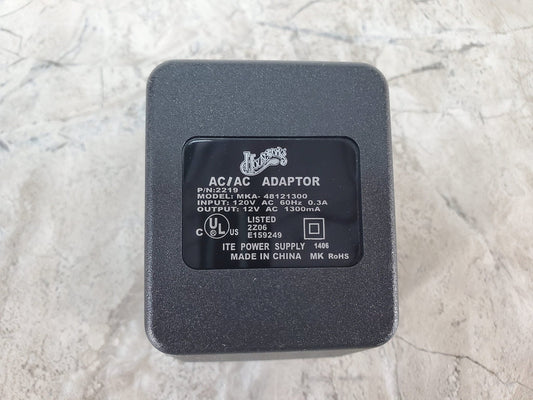
All systems use a 12 Volt dollhouse transformer, the majority of which have automatic
circuit breakers. The automatic circuit breaker protects the transformer. In the
event of an overload, power surge or short circuit:
- The thermal breaker simply
opens and removes the voltage until the unit cools.
- After cooling, the breaker
resets itself and automatically reapplies voltage to the output.
- In most cases, this eliminates
the necessity for fuses and fuse holders.
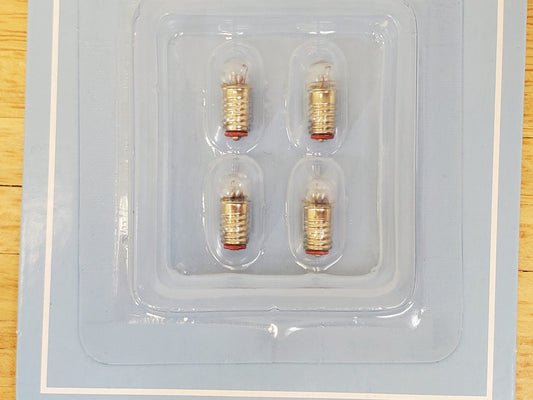
The number of lights (bulbs) that can be used with each transformer is determined
by the number of amps or milliamps of output.
1 amp equals 1,000 milliamps, ma
Remember, light means bulb-not
fixture-as some fixtures have more than one bulb. When determining the number of
light fixtures you will be using, count the bulbs and then check the type of bulb.
Add all of the ma together to get the total number. Be sure to include fireplaces,
porch or coach lights, and Christmas tree lights.
Model transformers and train transformers,
which are variable transformers, can produce 20 to 30 Watts of electricity, because
they are variable voltage rated between 10-16V. This much power could shorten the
life of the bulbs, or burn them out completely. Also, these transformers do not
normally contain automatic circuit breakers to protect your lights.
Excessive operating voltage shortens
the long term life of a 12V bulb. Most transformers start with a higher voltage
(between 13 and 14V) with no load, and reach the stated output voltage when supplying
the rated output voltage. When using
Mid-size Transformer, which will handle 20 to 26 light bulbs, at least 10
bulbs should be in use to maintain the long life of the bulbs. While you are attaching
your lights, do not leave the lights on for any length of time until you have at
least 10 lights installed. If your project calls for less than 10 lights, purchase
a smaller transformer. Your lights work best and last longer when they are using
the voltage output of the transformer.
The Flickering Fireplace or the
Flicker Flame Unit require a separate run and transformer. If you attach either
one to the main run, all the lights in the house will flicker. If you want candles
or Christmas lights that flicker, you could attach them to the same run as the fireplace
or flicker unit.
12V Christmas tree strings of lights
that do not flicker can be attached to the main 12V system in the dollhouse. Check
the string of lights you are using to determine the milleamps the string draws to
include in the total milleamps in the house for your transformer. For example: Cir-Kit
12 light string draws 37 m.a. and the
24 light string draws 75 m.a., Elect-a-lite 20 light string draws the equivalent
of two grain of wheat bulbs or
approximately 130 m.a. (see the "Everything
You Wanted to Know About Houseworks" section).
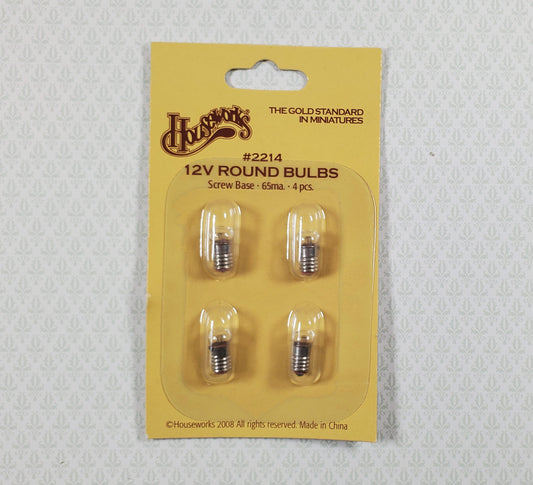
12V bulbs draw between 60-70 ma.
14V bulbs draw between 40-50 amps. 16V bulbs draw between 30-40 ma.
Note: Fluorette bulbs and spot
lights take more ma.
Always check the package to be
sure of the ma used for the fixture. Work with the highest number. When a soft,
non-glaring light is preferred, use the 16V bulb. For a brighter light in a room,
use the 12V bulb. Most bulbs last approximately 10,000 hours. The 16V will last
much longer than the 12V. It has less current, but a longer life.
Always use good light when wiring your dollhouse. Use a small lamp that you can
move or a flash light. I use a small combination hand-held light that works on batteries.
It has a flashlight on the end and a small fluorescent bulb on the side. If I turn
on the fluorescent bulb and lay it in the room, I can see everything. It is also
great to use for people to see in your houses or projects that are not wired.
While a variety of power systems have been mentioned here, I have found that there
is no "best" system. It is up to you to determine which system is best for your
dollhouse, based on the type of dollhouse you are working on and the power system
you feel most comfortable with.
Back to Table of Contents
|